1 / 6
Plastic Blue
Painting • 2021-2022
Academy of Fine Arts of Rome | Thesis Project Supervisor: Prof. Sergio Sarra
Core Philosophy The title references Chaos Theory and the Butterfly Effect: "Small variations in initial conditions produce large variations in the long-term behavior of the system." Our small daily choices about plastic have catastrophic long-term consequences.
The Problem of Scale Humans cannot truly visualize environmental statistics: 300 million tons of plastic produced annually (half for single-use), 91% never recycled, 273 million tons ending up in oceans and nature each year. The Great Pacific Garbage Patch spans 1.6 million km² — twice the size of Texas.
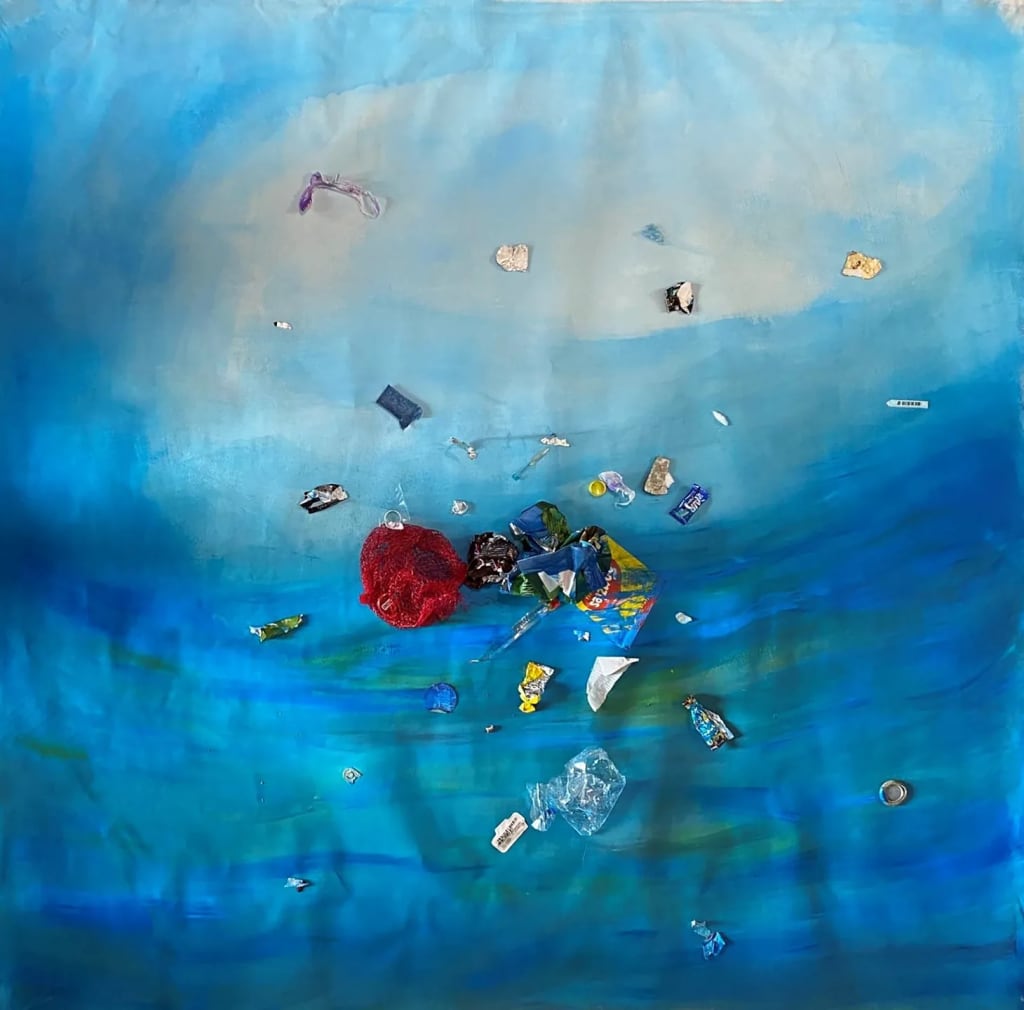
The Artworks Five paintings named after the five oceans, each containing a garbage island: The Atlantic, The Pacific, The Indian, The Arctic, and The Southern. Acrylic painting on canvas with real plastic elements — single-use items personally collected from the streets of Rome.
Origin Story The project began on Hormoz Island (southern Iran) — a remote island where, while camping under unpolluted stars, masses of garbage were discovered on the beach. Annual cleanup campaigns revealed ever-increasing waste, sparking this investigation into plastic's global impact.
Artists Studied The thesis examines Vik Muniz (Pictures of Garbage at Jardim Gramacho landfill), Jason Dodge (Cut a Door in the Wolf at MACRO Rome), and Ashley Bickerton (Flotsam Series with ocean debris from Bali).
UN Sustainable Development Goals Aligned with Goals 3, 6, 12, 13, 14, and 15 — addressing health, clean water, responsible consumption, climate action, and life below water and on land.